
Across three days, leaders, practitioners, and partners gathered for a single purpose: to understand how work, wellbeing, and risk are changing, and what global benefits leaders must do next.
What emerged wasn’t a checklist or a one size fits all framework. It was a mosaic of insights that, taken together, reframed benefits not as a cost center or compliance burden, but as a strategic system that touches culture, risk, workforce continuity, and long-term performance.
From generational dynamics to geopolitical disruption, and from India’s talent surge to Europe’s regulatory reset, the message was consistent: complexity is not the enemy. Ambiguity is.
Below is an overview of the sessions that defined the forum, along with the ideas shaping the next era of global benefits. Paul Devitt, Head of Global People Solutions got the program started by sharing that “Disconnected intelligence creates complexity. Connected intelligence creates momentum.”
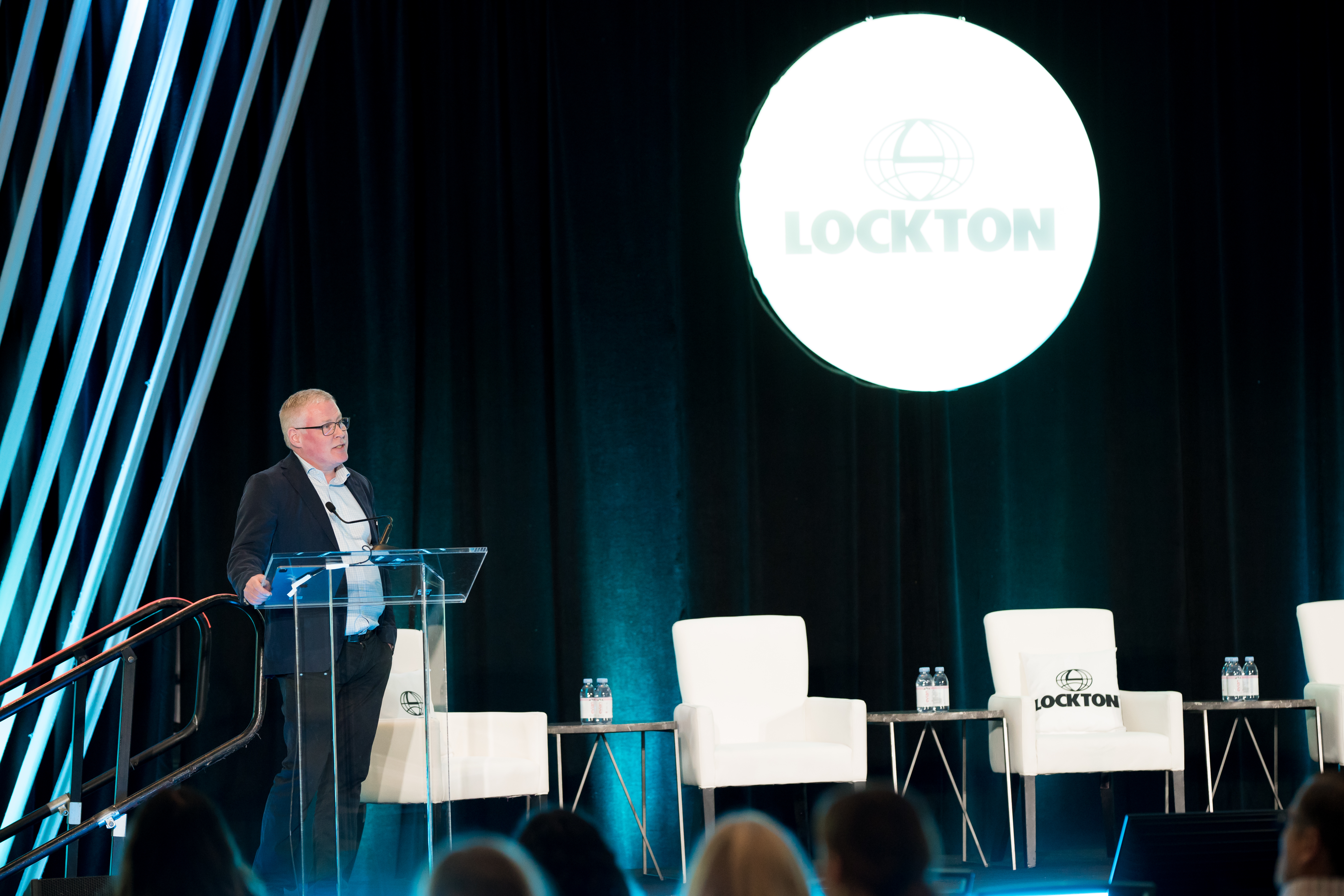
Leveraging AI and Technology in Global HR & Benefits
The Forum opened with a candid, self moderated discussion featuring Stephen Galván, Deanna MacLennan, and Rebecca Krauland of Lockton, who addressed the rapidly evolving role of artificial intelligence in HR and benefits.
Rather than focusing on futuristic use cases, the panel zeroed in on how AI is already being used today, supporting analytics, streamlining administration, and enhancing decision making, while also surfacing the risks that accompany rapid adoption. The speakers emphasized that the biggest challenge facing organizations isn’t access to AI, but confidence in how it’s deployed.
Deanna highlighted how there are so many articles and hype but that it’s important to note that “you're part of the same journey that everybody in this room is also going through.”
For global employers, questions around data privacy, bias, regulatory compliance, and employee trust loom large. The discussion set the tone for the Forum: technology can be a powerful enabler, but only when paired with clear governance and cross-functional alignment.
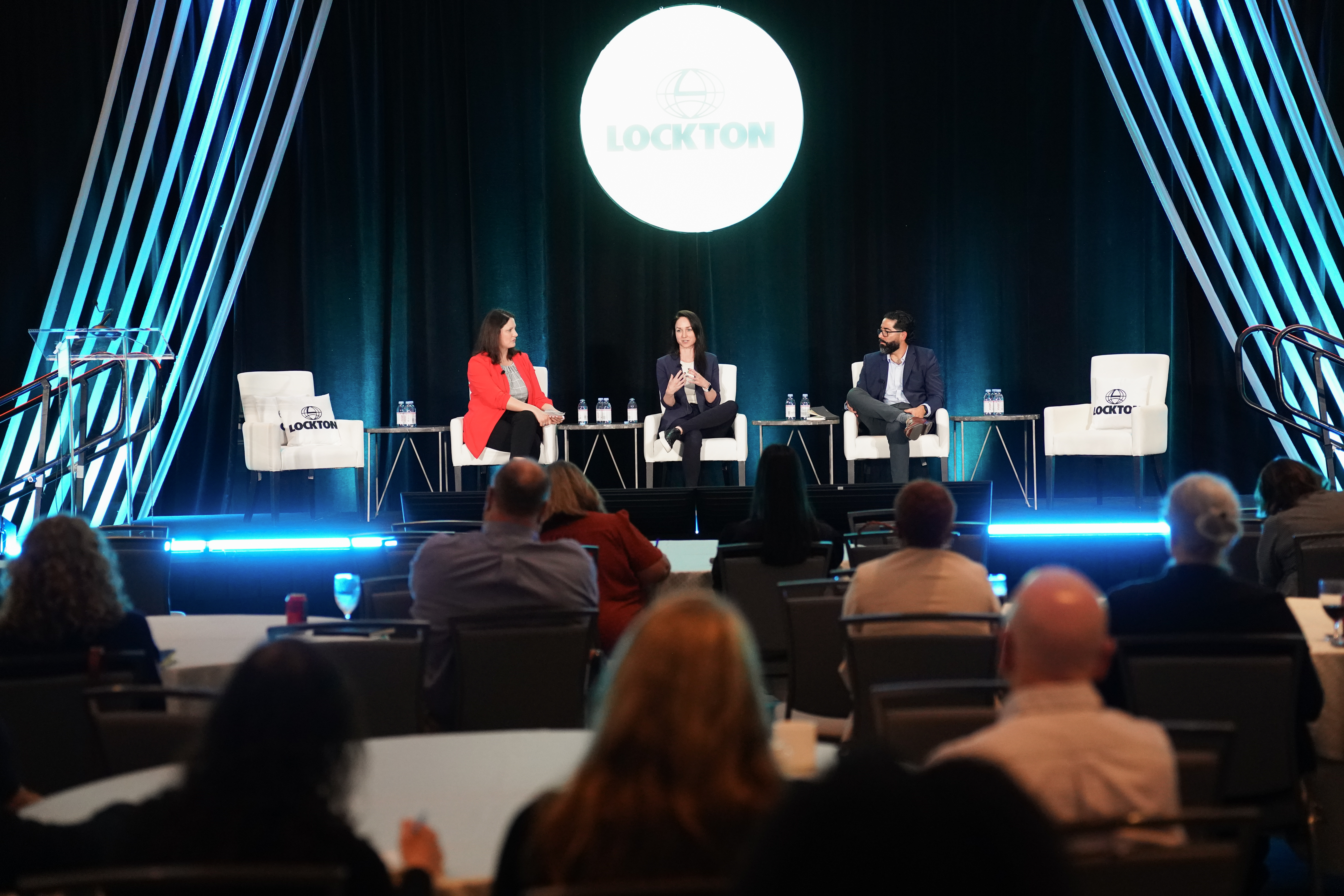
GLP‑1s at Global Scale: Clinical Insights, Market Dynamics, and Sustainable Employer Strategies
In one of the most detailed sessions of the Forum, Dr. Shealynn Buck, Chief Medical Officer at Lockton, examined the explosion of interest in GLP-1 medications and what the U.S. experience reveals for multinational employers.
Framing GLP-1s as both a clinical advancement and a benefits design decision, Buck walked attendees through how demand driven adoption, especially for weight management, has driven significant cost growth without reliably improving outcomes. Drawing on real world employer data, she highlighted high discontinuation rates and the disconnect between clinical trial populations and actual workforce usage.
Rather than positioning GLP-1s as a success or failure, Buck urged employers to think systemically. “Medication alone cannot solve the global obesity burden,” she reminded the audience, emphasizing that sustainable strategies require clinical guardrails, lifestyle integration, and intentional governance. The session challenged employers to slow down, learn from early adopters, and build infrastructure before scaling coverage globally.
The ‘Floor Not Ceiling’ Approach: Global Consistency, Local Relevance
In The ‘Floor Not Ceiling’ Approach, Laura Gallerane (Rapid7) and Martine Donaldson (Kaseya) joined Nick Dobelbower (Lockton) to explore one of the most persistent tensions in global benefits: consistency versus local relevance. Nick asked, “How do we achieve some level of consistency, especially in experience, not in programs? The programs are not going to be the same in every country.”
The panel discussed why organizations are moving away from rigid global standards toward a principles based approach, establishing a global “floor” while allowing flexibility for country specific regulation, culture, and employee expectations. Speakers shared how clarity of intent, rather than uniform design, helps global benefits programs remain equitable and meaningful across regions.
The conversation reinforced that successful global strategies depend as much on listening locally as they do on setting direction centrally.
Sustainable Human Performance: The New Frontier of Global Wellbeing
Nicole Stec (Lockton) challenged traditional views of wellbeing in Sustainable Human Performance, encouraging organizations to look beyond wellness programs and focus on the systems that shape how people work.
The session reframed wellbeing as an enabler of performance, highlighting factors such as workload design, psychological safety, energy management, caregiving responsibilities, and the impact of constant connectivity. Rather than adding more benefits, Stec urged leaders to design environments where people can perform at a high level without sacrificing their health. Nicole highlighted that “The problem isn’t lack of effort. It’s that traditional wellness approaches don’t address how work is actually designed.”
For many attendees, the session underscored a shift already underway: wellbeing is no longer a perk. It is a strategic imperative tied directly to resilience and results.
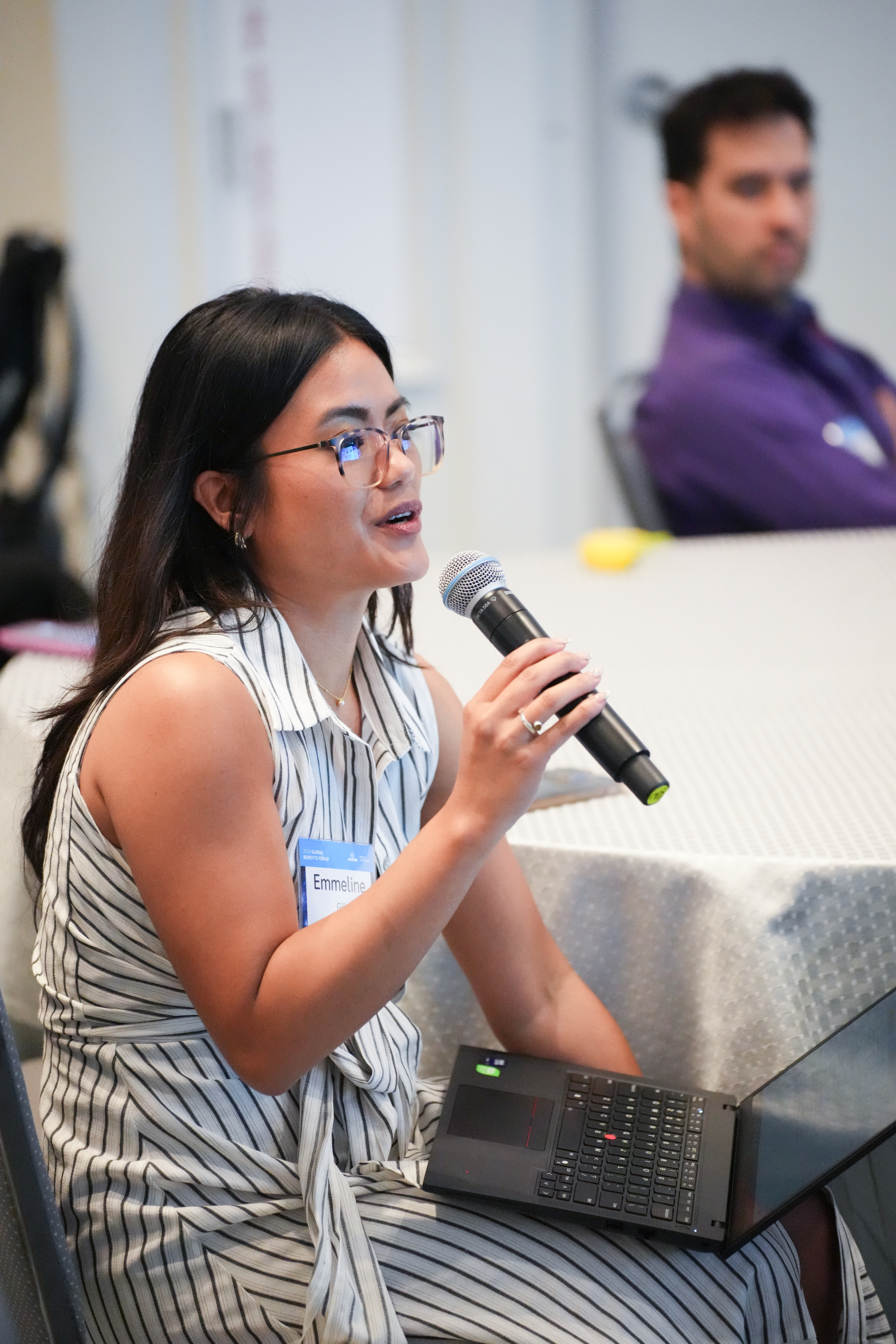
Building the Plane While Flying It: Rolling Out Benefits Amid Global Expansion
Rapid organizational growth was the focus of Building the Plane While Flying It, featuring Paul O’Flynn (Berkshire Hathaway) and Joanne Gooding (Diligent), moderated by Nick Dobelbower (Lockton).
Panelists shared candid stories of launching benefits programs in new markets with limited data, uncertain headcount, and evolving business strategies. Rather than waiting for perfect conditions, they discussed prioritizing “minimum viable” benefits, managing compliance risk, and refining programs over time.
Paul shared, “Most of the time, you don’t have enough time to get ahead of things. You’re working without perfect data or infrastructure and figuring it out as you go.”
The session resonated with leaders facing expansion pressure, offering reassurance that iteration, when paired with strong partnerships and governance, is often the most practical path forward.
Keynote: The Multigenerational Opportunity – Kim Lear
Kim Lear grounded the forum with a powerful reframing of generational differences, not as friction points, but as untapped strategic assets. Drawing on demographic research and sociology, she reminded leaders that generations are shaped by formative conditions, not stereotypes.
Rather than debating “work ethic” or flexibility, she challenged leaders to create shared standards, grounded in reliability, quality, judgment, and ownership.
Kim shared, “What leaders often call a ‘lack of work ethic’ is really a mismatch between unspoken expectations and visible behaviors.”
Her call to action was clear: effective leadership today requires generational fluency, explicit norms, and mentorship that reflects, not romanticizes, experience.
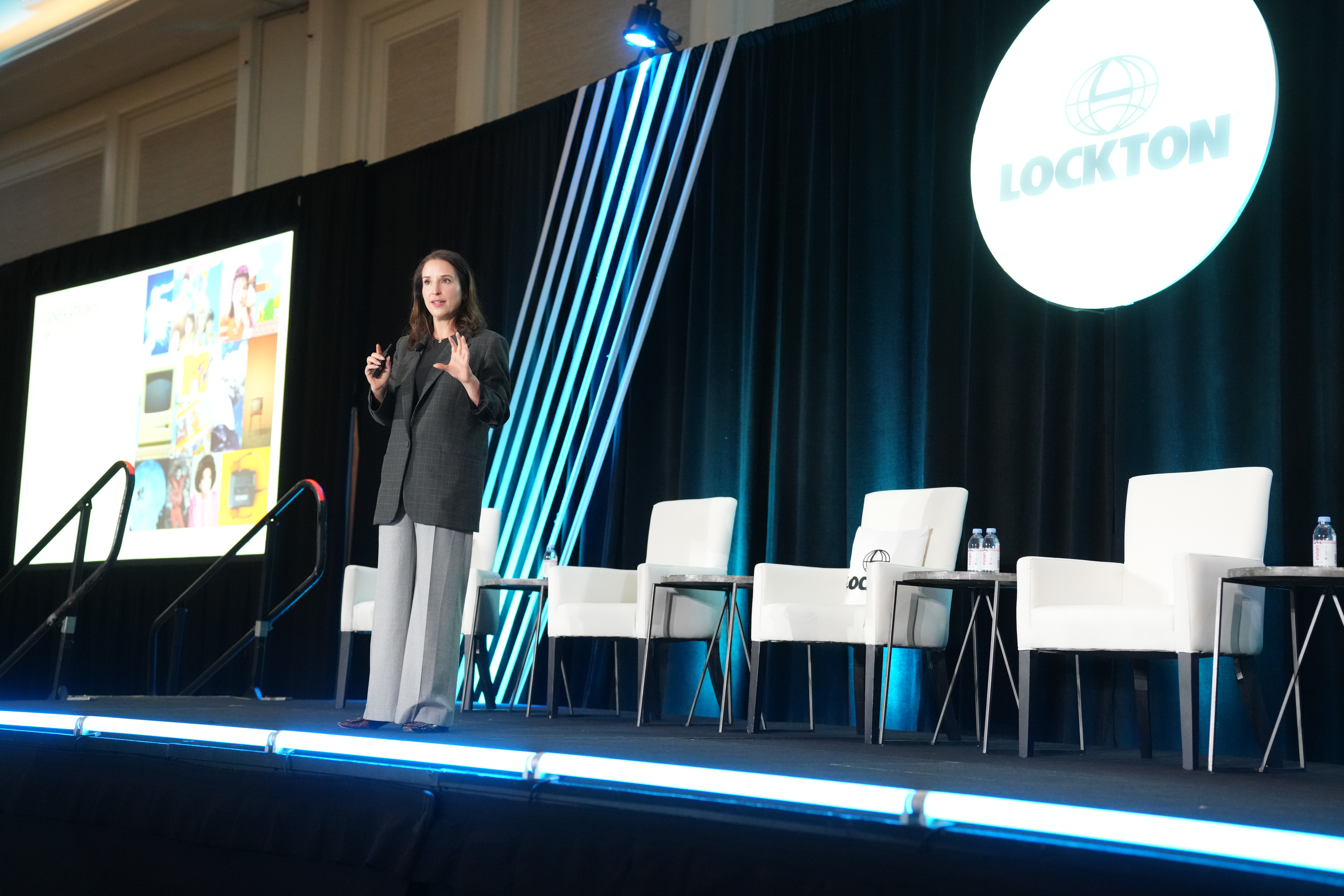
From Insight to Action: Leveraging Generational Differences Through Benefits Strategy
The generational conversation continued in an HR professionals- only workshop led by Stuart Harris and Carolyn Cohen of Lockton. Through facilitated peer discussions, benefits professionals explored how generational differences show up in real world benefits programs, from enrollment behavior and technology preferences to perceptions of fairness.
Participants examined trade offs behind benefits decisions and discussed how constraints such as cost, governance, and regulation limit flexibility. The session concluded with practical ideas for evolving benefits communication and design over the next several years.
The Deafening Silence from Employee Communications
In The Deafening Silence from Employee Communications, Kate Anawaty and Chris Callahan (Lockton) joined Jessica Perdicaris (Capco) and Honey Belachew (Five Guys) for a candid discussion on why benefits communication so often fails to resonate.
Panelists explored challenges unique to global, multilingual workforces and shared insights into what actually cuts through the noise. Kate emphasized, “If an employee does not know about a benefit at the time they need it, it is not an employee problem. That is a leadership problem.”
The conversation emphasized moving away from one-way communication toward strategies that reflect how employees consume information today, prioritizing clarity, relevance, and empathy.
One Strategy, Many Cultures: Global Strategy Across HQ and Latin America
One Strategy, Many Cultures brought together Jim Fornabaio and Daniel Duran (TGCS) with Darla Creswell (Aggreko), moderated by Marcela Flores (Lockton), to examine the realities of implementing global benefits strategies across Latin America.
Speakers discussed balancing headquarters expectations with regional labor dynamics, cultural norms, and regulatory environments. The session highlighted the importance of local advocacy and trust based relationships in ensuring global programs remain equitable and effective.
Jim shared that at TGCS, “We had to make sure that the value proposition of our benefits, which are very strong in all of our countries, was really understood.”
Transparency, local partnership, and trust emerged as the pillars of success—especially when benefits carried real, life‑altering impact.
Leveraging Traditional Risk Management to Manage People Risk
Rick Garcia and Paul Devitt of Lockton reframed benefits through a risk management lens, encouraging organizations to view people risk with the same discipline applied to traditional enterprise risk.
The session explored how benefits, wellbeing, and workforce strategy intersect with business continuity, reputation, and financial stability, underscoring the evolving role of benefits leaders as risk stewards, not just program administrators.
Rick shared that “the number one thing that I think we all have in common is how do we protect the most important asset of the organization, which is the people.”
Participants left with a compelling idea: treat benefits as people risk engineering, designed with the same rigor as property or cyber risk.
Managing Compliance and the Changing Needs of Assignees
In a globally focused session, Bryan Rankin, Neil Carruthers, and Sara Monica Diaz of Lockton examined the shifting compliance landscape affecting expatriates and mobile employees across LATAM, MENA, and the U.S.
Speakers highlighted healthcare access, regulatory complexity, and changing employee expectations, offering practical strategies for designing compliant, competitive mobility programs in an increasingly complex environment.
Neil reminded that “It’s not just about understanding who your employees are in a region, but also who is traveling there, who is on business, and who might be caught in the middle of a situation.”
Mobility strategy today demands coordination across benefits, security, legal, and leadership before the headlines break.
India Talent Platform – Cost Advantage to Capability Advantage
Sudip Indani and Nitin Jain of Lockton explored India’s evolution from an outsourcing destination to a strategic talent hub.
As competition for skilled talent intensifies, the session focused on retention, career mobility, and aligning benefits with longer term workforce sustainability.
The discussion emphasized moving beyond compensation led strategies toward building robust talent ecosystems that support growth and innovation.
“Employees are not only happy with salaries alone now. They are looking at long-term wealth,” Sudip shared.
From semi‑flex benefits and OPD growth to ESOPs and financial wellbeing, India is redefining the employee value proposition at scale.
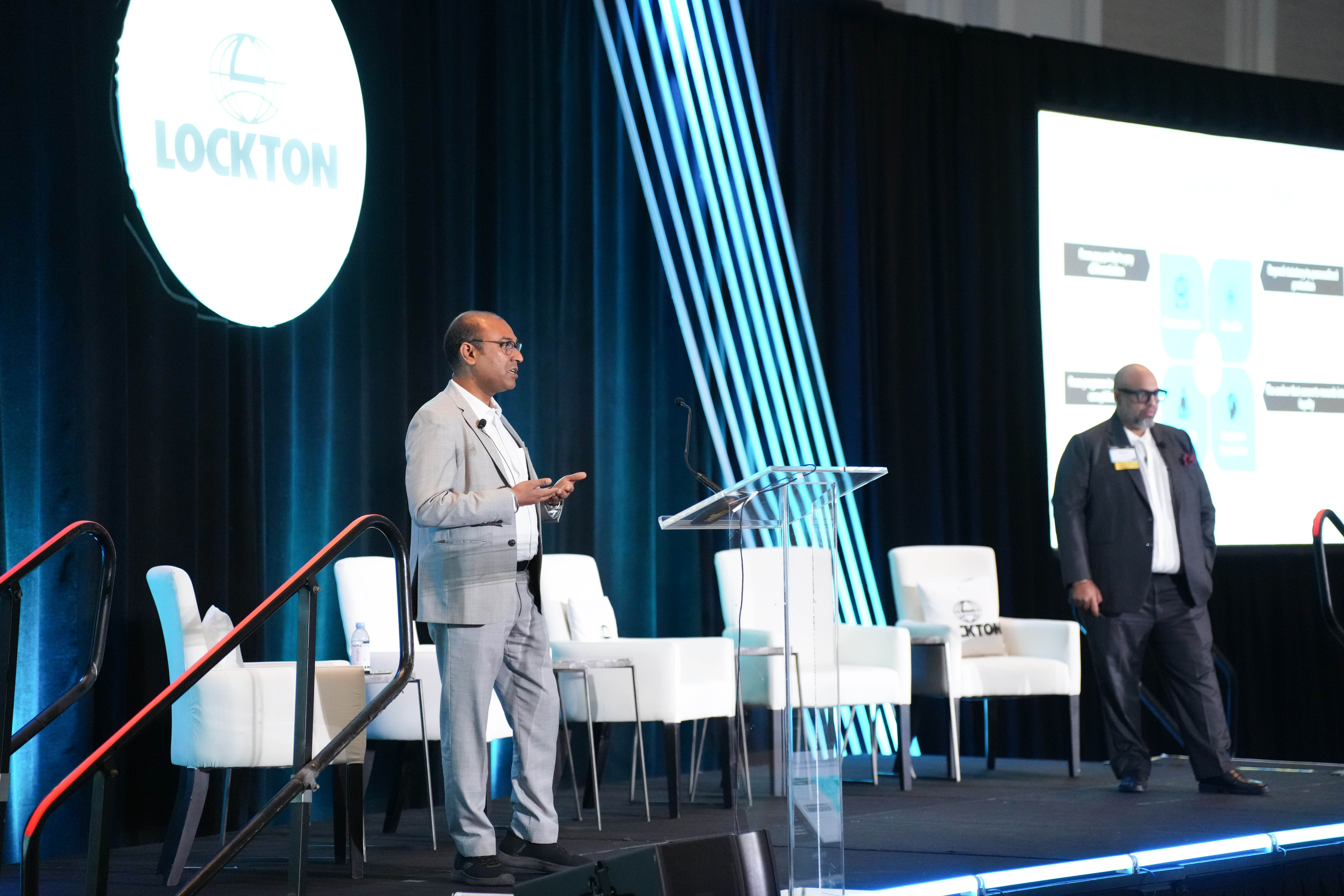
Innovation Around the World: One Theme, Many Expressions
Panel: Brazil, France, Germany, India
Closing the Forum, Sudip Indani (India), Jeremy Carnero (France), Frank Rebenstorff (Germany), and Eduardo Kolmar (Latin America) joined moderator Phil Simmance (UK) for a global perspective on benefits innovation.
The session examined rising costs, regulatory change, and digital transformation, reinforcing how benefits are becoming a leadership level priority worldwide, and how advisors play a critical role in helping organizations navigate that complexity.
Brazil: Medical inflation, fraud, and judicialization are pushing demand for AI‑driven claims analysis and personalized prevention.
France: Social security retrenchment and regulatory complexity are shifting differentiation to pensions, profit sharing, and prevention.
Germany: Employers are re‑entering medical benefits via top‑ups and preparing for sweeping pay transparency requirements.
India: Digital health, OPD expansion, and integrated wellbeing platforms are redefining access and experience.
Jeremy clarified that “The cultural aspect of things is going to be key, and if you don’t adapt locally, people are not going to engage.”
Across regions, the direction was consistent: smarter data, human‑centered design, and cultural alignment.
Breakout Sessions: Focused Insights
Global Hiring Without Borders: How EOR Enables Faster, Compliant Expansion (Atlas)
Takeaway:
Employer of Record models can accelerate global hiring when integrated into a broader workforce strategy.
The End of One‑Size‑Fits‑All Benefits: Designing Choice at Scale (Espresa)
Takeaway:
Flexible benefits models like LSAs provide personalization without adding administrative complexity.
Beyond EAPs: Transforming Workplace Wellbeing (TELUS Health)
Takeaway:
Holistic, human‑centered wellbeing approaches are replacing siloed programs.
The Big Takeaways
Across all sessions, several truths rose to the top:
Benefits play a broader role and influence organizational culture.
Clear communication helps build trust, while unnecessary complexity can undermine it.
Local context is critical, and global strategies need to allow for flexibility.
Risk, wellbeing, and performance are closely connected.
Avoiding action can create additional risk.
Looking Ahead
Global benefits leadership is becoming more complex and more important for organizations. This forum showed that companies that invest in clarity, alignment, and thoughtful design are better positioned to manage that complexity effectively.
Feedback will help shape next steps, and the ideas shared in these sessions will evolve as organizations put them into practice.
Thank you to the speakers, clients, and partners who joined us and shared openly. The conversation continues at Global Benefits Forum UK and Asia events (opens a new window) in 2026.