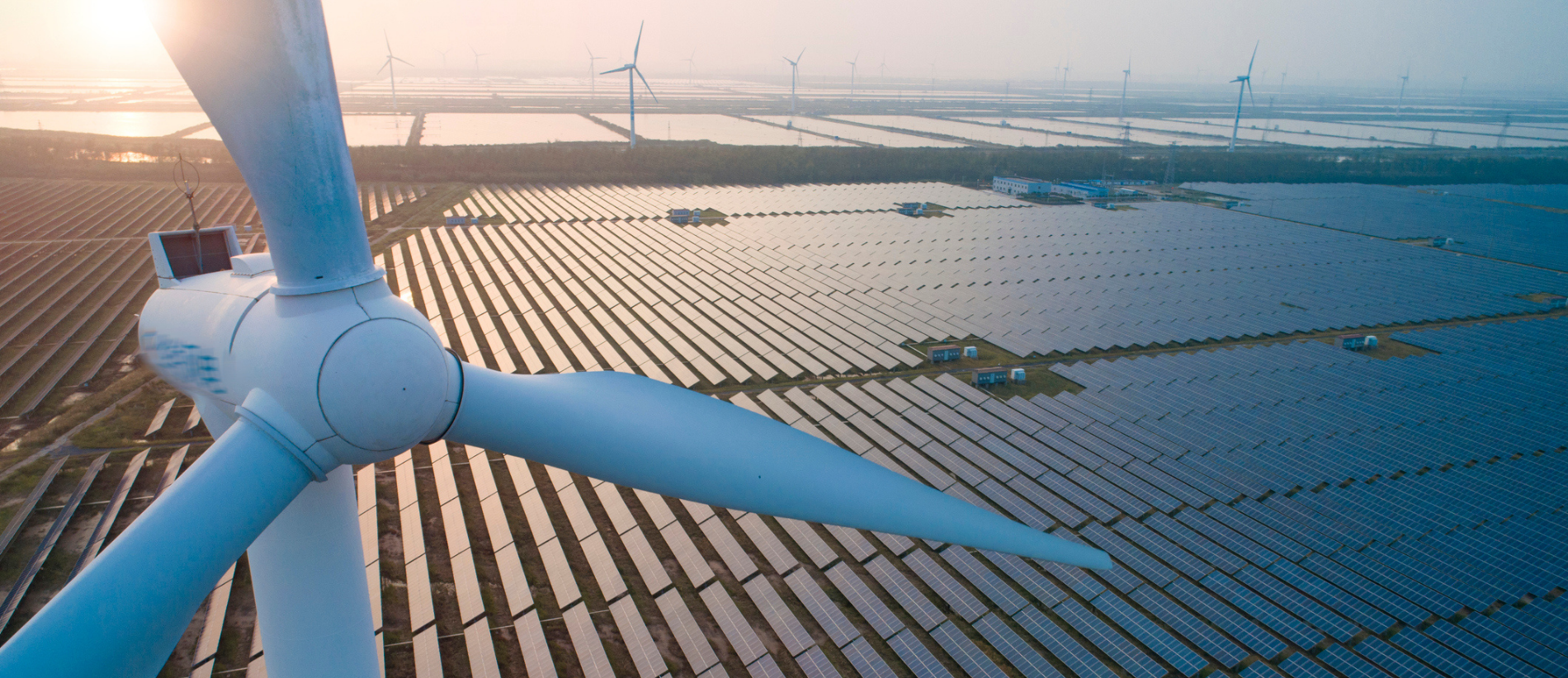
As one of the leading risk consultants and insurance brokers within the renewable energy industry, Lockton has vast experience in identifying risks and designing cost efficient solutions to transfer and mitigate those risks, throughout all sections of the rapidly developing renewable energy sector.

CORPORATE

Energy & Power

Contact Us (opens a new window)

We cover the spectrum of risks you need to think about and address

As one of the leading risk consultants and insurance brokers within the renewable energy industry, Lockton has vast experience in identifying risks and designing cost efficient solutions to transfer and mitigate those risks, throughout all sections of the rapidly developing renewable energy sector. With a comprehensive knowledge of all of the industries’ constituents from Lenders to Developers and OEMs, we are in the best position to be able to develop the right bespoke product for each of our Client’s very project - specific requirements.

Our Downstream Energy team has a vast experience of designing and placing cost effective risk transfer solutions and products for clients throughout the Downstream Energy sector including exploration, refining, petrochemical, transport and storage.

Our Upstream Energy team specialises in the design and placement of complex, multi-coverage, insurance programmes for clients throughout the Upstream Energy sector and its support industries. 

What we bring to your business

  • Lockton's Energy team is experienced in the challenges faced by upstream and downstream organisations. We recognise that risk management requirements and appetite vary greatly and we are able to support a client’s growth, through efficient and cost effective risk identification and management. We focus on: Construction Risks, Operational Risks, Natural Disasters, Environmental Requirements, Mergers and Acquisitions, Emerging Technologies, Policy Wording and Coverage analysis. 

  • Through Lockton's global network we can provide access to the best expertise  and risk transfer capacity wherever it is located at any moment in time

  • We have specialists with wide experience in what is now commonly referred to as ‘conventional energy’ having been engaged upon multi billion $ Thermal and Geo Thermal projects throughout their careers.

  • Our specialist teams provide experience and capabilities to all areas within the industry being proactive to produce positive outcomes whichever side of a transaction we are acting for.

Our services and areas of expertise

Upstream Energy 

  • Physical Damage

  • Business Interruption

  • Control of Well

  • Mobile Rigs

Midstream/Downstream Energy 

  • Physical Damage

  • Machinery Breakdown

  • Business Interruption

    Tank Farms, Pipelines, Gas Processing Plant, Petrochemicals, Refineries and Power Generation.

Renewable Energy 

  • Physical Damage including Business Interruption during transit, erection, testing and commissioning, operations, repairs/upgrading.

  • Liability to Third Parties during all phases of a Project

For; Wind Farms, PV and CSP Solar Plants, Bagasse and Bio Mass Power Plants, Hydro Electric Power Plants, Waste to Energy Power Plants.

Key Contacts

Placeholder image

Alan Corney

Regional Head of Risk Management

Placeholder image

Sunil Machado

Head of Power and Infrastructure

Reach out to us

Latest news and insights

Lockton Secures Reinsurance Licence in Saudi Arabia 

Appoints Mohammed Al Rowais as CEO for Reinsurance Lockton Secures Reinsurance Licence in Saudi Arabia Appoints Mohammed Al Rowais as CEO for Reinsurance

Political Violence & War Coverage

Recent developments in the Middle East have led insurers to take a closer look at political violence and war risk across the region. For organisations with operations, assets or supply chains connected to the Gulf, this has created a more fluid environment for insurance discussions.

Political violence cover exists to support organisations through periods of uncertainty. While uncertainty itself is not new, the pace at which market conditions are evolving has increased, making early awareness and timely conversations more helpful than usual.Recent developments in the Middle East have led insurers to take a closer look at political violence and war risk across the region. For organisations with operations, assets or supply chains connected to the Gulf, this has created a more fluid environment for insurance discussions.

Political violence cover exists to support organisations through periods of uncertainty. While uncertainty itself is not new, the pace at which market conditions are evolving has increased, making early awareness and timely conversations more helpful than usual.

Organisation Recovery

Volatility and uncertainty are no longer intermittent challenges for businesses — they are part of day-to-day operations. Against the backdrop of tensions in the Middle East, businesses are navigating an environment where disruption can emerge quickly and from multiple directions. Yet what shapes performance amid this volatility has less to do with the disruption itself than with an organisation’s ability to respond, adapt and recover.
Research from McKinsey & Company and SAP found that only around 25% of companies consider themselves to be fully resilient[1,2]. Those that can proactively build resilience in turn gain a competitive advantage.

This moment calls for organisations to take a more deliberate look at how they strengthen readiness, resilience and protection across their people, finances and operations.

 Volatility and uncertainty are no longer intermittent challenges for businesses — they are part of day-to-day operations. Against the backdrop of tensions in the Middle East, businesses are navigating an environment where disruption can emerge quickly and from multiple directions. Yet what shapes performance amid this volatility has less to do with the disruption itself than with an organisation’s ability to respond, adapt and recover.
Research from McKinsey & Company and SAP found that only around 25% of companies consider themselves to be fully resilient[1,2]. Those that can proactively build resilience in turn gain a competitive advantage.

This moment calls for organisations to take a more deliberate look at how they strengthen readiness, resilience and protection across their people, finances and operations.

Business Interruption Values

When the commodity prices driving a business’s revenue shift as sharply as they have in early 2026, the assumptions built into an organisations insurance programme can quickly fall behind. This piece looks at what that means and where the gaps tend to appear.
As of early March 2026, oil prices have soared. Although prices have sharply risen and then fallen back several times in response to the rapidly shifting nature of events, projections suggest a real potential surge to USD 150 a barrel. Global oil benchmarks have seen their strongest weekly uptick since 2020, and global natural gas prices have also risen sharply, extending their biggest gains since the energy crisis of 2022. With energy infrastructure in the GCC now also being subject to a (growing) number of attacks, and the near closure of the Strait of Hormuz, businesses of all types face uncertainties and interruptions.

For any business whose revenue is connected to commodity markets, or indeed that is reliant on imports that travel through the Strait, these shifts raise a question that goes beyond market commentary: Does the cover sitting behind the business still match the income it is actually generating? Where declared values were set in a lower price environment, the answer increasingly is no.When the commodity prices driving a business’s revenue shift as sharply as they have in early 2026, the assumptions built into an organisations insurance programme can quickly fall behind. This piece looks at what that means and where the gaps tend to appear.
As of early March 2026, oil prices have soared. Although prices have sharply risen and then fallen back several times in response to the rapidly shifting nature of events, projections suggest a real potential surge to USD 150 a barrel. Global oil benchmarks have seen their strongest weekly uptick since 2020, and global natural gas prices have also risen sharply, extending their biggest gains since the energy crisis of 2022. With energy infrastructure in the GCC now also being subject to a (growing) number of attacks, and the near closure of the Strait of Hormuz, businesses of all types face uncertainties and interruptions.

For any business whose revenue is connected to commodity markets, or indeed that is reliant on imports that travel through the Strait, these shifts raise a question that goes beyond market commentary: Does the cover sitting behind the business still match the income it is actually generating? Where declared values were set in a lower price environment, the answer increasingly is no.
See all news and insights