
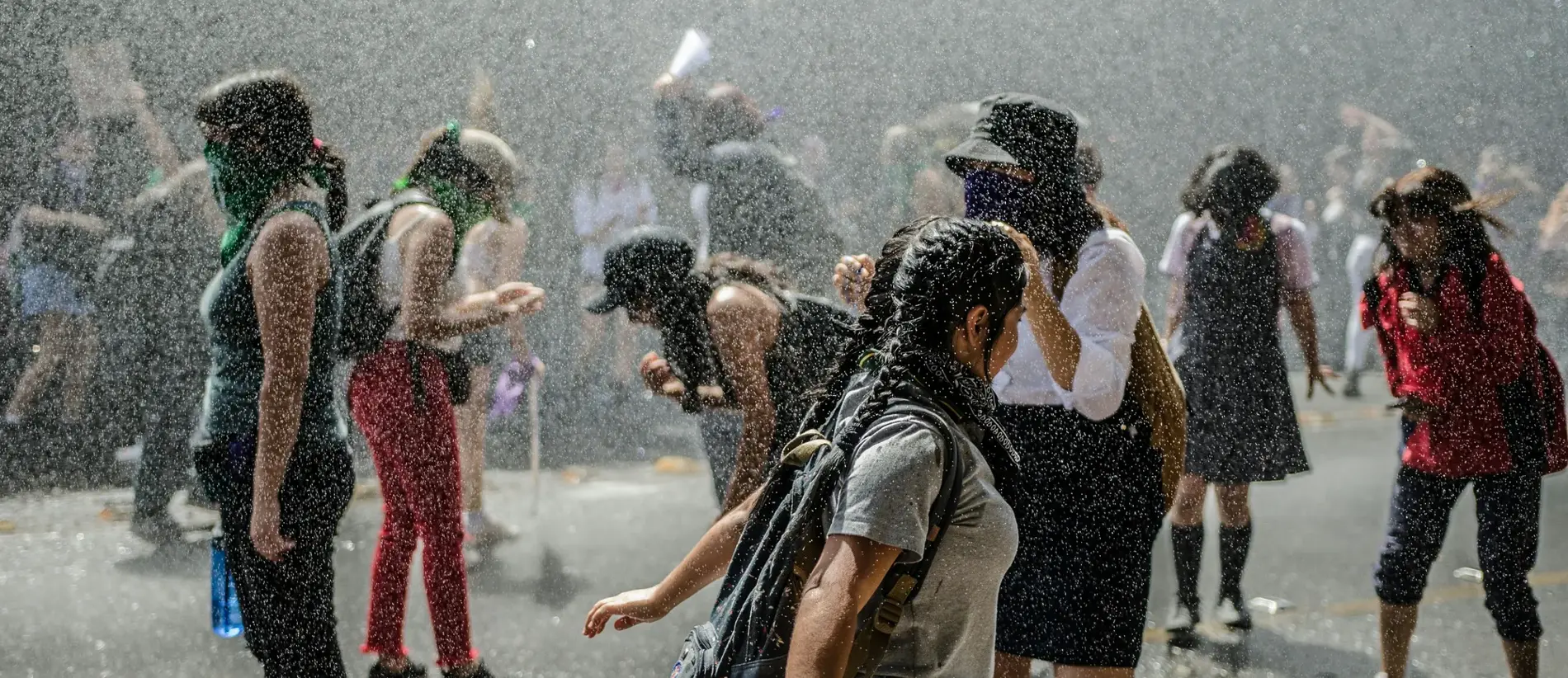
Extreme weather is no longer a theoretical or future risk to live entertainment. Meteorological perils, such as rainfall, wildfires, and extreme heat, are scuppering productions now.
As unpredictable weather patterns become a systemic threat to the live events, gaps are emerging in traditional insurance solutions for artists, organisers, and promoters. Parametric insurance can bridge this vulnerability, offering the speed and certainty necessary to keep the entertainment industry resilient.
Global heating: a rise in volatile weather affecting live events
Live events are acutely exposed to disruption from severe weather. And the financial ramifications of event cancellation, curtailment, or abandonment can leave organisers facing significant losses.
High profile examples within the last year, include:
Bad Bunny, July 2026, Milan, Italy
A severe thunderstorm, comprised of driving rain and large hailstones, caused the evacuation (opens a new window) of the Snai La Maura Hippodrome and subsequent concert curtailment.
FIFA Fan Festival, July 2026, Toronto, Canada
Canadian authorities were compelled to abandon the FIFA Fan Festival and England vs Argentina watch party due to wildfire smoke (opens a new window) producing hazardous air quality that was deemed dangerous enough to limit all outdoor activities.
Primavera Sound, June 2026, Barcelona, Spain
On the first day of Catalan’s premier music festival, torrential downpours forced the cancellation (opens a new window) of performances by Massive Attack, Doja Cat, and Mac Demarco.
Defqon.1, June 2026, Biddinghuizen, The Netherlands
Organisers were forced to scrap (opens a new window) the dance music event after the Royal Netherlands Meteorological Institute issued a ‘code red warning’ due to extreme heat – creating a $46 million loss to the contingency market.
Burning Man, August 2025, Nevada, US
Stemming from wind gusts “in excess of 45 mph”, a major dust storm (opens a new window) brought about a temporary cessation to Burning Man as the festival site was shut down.
How does parametric insurance mitigate meteorological perils?
Parametric insurance provides a pre-agreed payout when a defined weather trigger is reached. Rather than the actual value of the loss incurred, coverage is structured around specified levels of rainfall or wind speed, for example.
To price policies, underwriters rely on sophisticated data modelling, incorporating real-time, probabilistic, and historic weather data sets to determine the likelihood and potential severity of a meteorological event. Ostensibly, the lower the threshold, the greater the premium.
By restricting cover to only the probability of a parameter threshold being breached, underwriters can reduce uncertainty and expand the provision of insurance into multiple different business lines or areas of high risk.
Parametric solutions offer cover for the following perils:
Rainfall
Via ground-based gauges, satellite, or radar, rainfall can be accurately assessed against predefined thresholds within highly localised areas over highly customisable, sub-daily timeframes.Hailstorms
Independent third-party measurements of hailstone diameter can estimate kinetic energy and, therefore, the force of impact. Parametric pay outs are triggered based on hailstone size.Wildfires
To combat smoke and hazardous air, parametric policies are structured in relation to an event’s proximity to the burn scar of wildfires.Extreme heat
Policies can be designed for pay outs at specified temperature increases recorded on site during a live performance.Dust storms
Dust storms emanate from arid and windy conditions. Parametric insurance covers this peril by monitoring low rainfall in the lead up to an event, and wind speeds during performance.
Why is the entertainment industry gravitating toward parametric insurance?
Parametric insurance offers various benefits over more traditional forms of entertainment coverage.
Assessing only the physical risk parameters enables rapid claims assessment and swift access to capital following extreme weather, helping organisers manage cancellation costs, protect cash flow, and recover quicker. Parametric policies often pay out within a week of a trigger event occurring, and sometime within a matter of hours.
Exclusions are exceptionally rare in the parametric space. Where contingency insurance displays little appetite to cover a live event, parametric insurance can step in to provide protection.
The certainty of parametric insurance is a further advantage. When placing coverage, policyholders can be confident of exact pay outs if severe weather was to strike.
How brokers help tailor parametric insurance for individual events
Parametric insurance issues a high degree of flexibility for insureds, with risk appetite balanced against required premiums. Through collaboration with a broker, policy triggers can be calibrated to correspond to varying levels of disruption from adverse weather.
For live events, parametric insurance can complement traditional contingency cover. While parametric coverage can offer protection against event cancellation or abandonment, it also addresses incremental revenue losses from poor weather conditions.
Moderate rainfall or wind speeds may not force an event cancellation, but they can still deter attendees from purchasing tickets, refreshments, and merchandise. Accordingly, event organisers can structure coverage around peak event hours. For example, a parametric policy could trigger at 10mm of rainfall, providing a payout that offsets an anticipated 25% reduction in on-site spending.
Talk to us
Lockton’s unified proposition draws on collaboration between our Entertainment Practice and Parametric Insurance Team.
By working to understand the unique risk profile of your event, we structure bespoke insurance solutions that are tailored to your exposures.
For further information on what parametric insurance can offer your production, reach out to a member of the Entertainment Practice here (opens a new window), or our Parametric Team here (opens a new window).
Launching in September 2026, our latest thematic report: Global heating: navigating a new business reality, explores how a hotter world is reshaping exposures, insurability, and risk financing.