Lockton helps design total rewards and benefits aligned with your business strategy that increases perceived value and helps you attract and retain talent while controlling costs.

Total Rewards & Benefits

Lockton helps design total rewards and benefits aligned with your business strategy that increases perceived value and helps you attract and retain talent while controlling costs.

Key Contacts

Placeholder image

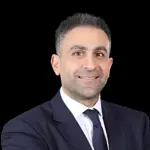
Adeeb AlNaser

CEO, UAE, Lockton Insurance Brokers

Placeholder image

Sumit Kapur

People Solutions Director

General Inquiries

Get in touch

contact@lockton.com

Your People. Our Solutions

Your people are unique. The way you support and engage them should be too. At Lockton, we combine global reach and expertise with a family-business mentality, working with you to build a solution that reflects your employees and truly sets you apart

Find out more

Find out more about our solutions from an office near you

Find an office
*100+ Lockton offices and partner offices worldwide
Lockton blue globe

Latest news & insights

Lockton Secures Reinsurance Licence in Saudi Arabia 

Appoints Mohammed Al Rowais as CEO for Reinsurance Lockton Secures Reinsurance Licence in Saudi Arabia Appoints Mohammed Al Rowais as CEO for Reinsurance

Political Violence & War Coverage

Recent developments in the Middle East have led insurers to take a closer look at political violence and war risk across the region. For organisations with operations, assets or supply chains connected to the Gulf, this has created a more fluid environment for insurance discussions.

Political violence cover exists to support organisations through periods of uncertainty. While uncertainty itself is not new, the pace at which market conditions are evolving has increased, making early awareness and timely conversations more helpful than usual.Recent developments in the Middle East have led insurers to take a closer look at political violence and war risk across the region. For organisations with operations, assets or supply chains connected to the Gulf, this has created a more fluid environment for insurance discussions.

Political violence cover exists to support organisations through periods of uncertainty. While uncertainty itself is not new, the pace at which market conditions are evolving has increased, making early awareness and timely conversations more helpful than usual.

Organisation Recovery

Volatility and uncertainty are no longer intermittent challenges for businesses — they are part of day-to-day operations. Against the backdrop of tensions in the Middle East, businesses are navigating an environment where disruption can emerge quickly and from multiple directions. Yet what shapes performance amid this volatility has less to do with the disruption itself than with an organisation’s ability to respond, adapt and recover.
Research from McKinsey & Company and SAP found that only around 25% of companies consider themselves to be fully resilient[1,2]. Those that can proactively build resilience in turn gain a competitive advantage.

This moment calls for organisations to take a more deliberate look at how they strengthen readiness, resilience and protection across their people, finances and operations.

 Volatility and uncertainty are no longer intermittent challenges for businesses — they are part of day-to-day operations. Against the backdrop of tensions in the Middle East, businesses are navigating an environment where disruption can emerge quickly and from multiple directions. Yet what shapes performance amid this volatility has less to do with the disruption itself than with an organisation’s ability to respond, adapt and recover.
Research from McKinsey & Company and SAP found that only around 25% of companies consider themselves to be fully resilient[1,2]. Those that can proactively build resilience in turn gain a competitive advantage.

This moment calls for organisations to take a more deliberate look at how they strengthen readiness, resilience and protection across their people, finances and operations.

Business Interruption Values

When the commodity prices driving a business’s revenue shift as sharply as they have in early 2026, the assumptions built into an organisations insurance programme can quickly fall behind. This piece looks at what that means and where the gaps tend to appear.
As of early March 2026, oil prices have soared. Although prices have sharply risen and then fallen back several times in response to the rapidly shifting nature of events, projections suggest a real potential surge to USD 150 a barrel. Global oil benchmarks have seen their strongest weekly uptick since 2020, and global natural gas prices have also risen sharply, extending their biggest gains since the energy crisis of 2022. With energy infrastructure in the GCC now also being subject to a (growing) number of attacks, and the near closure of the Strait of Hormuz, businesses of all types face uncertainties and interruptions.

For any business whose revenue is connected to commodity markets, or indeed that is reliant on imports that travel through the Strait, these shifts raise a question that goes beyond market commentary: Does the cover sitting behind the business still match the income it is actually generating? Where declared values were set in a lower price environment, the answer increasingly is no.When the commodity prices driving a business’s revenue shift as sharply as they have in early 2026, the assumptions built into an organisations insurance programme can quickly fall behind. This piece looks at what that means and where the gaps tend to appear.
As of early March 2026, oil prices have soared. Although prices have sharply risen and then fallen back several times in response to the rapidly shifting nature of events, projections suggest a real potential surge to USD 150 a barrel. Global oil benchmarks have seen their strongest weekly uptick since 2020, and global natural gas prices have also risen sharply, extending their biggest gains since the energy crisis of 2022. With energy infrastructure in the GCC now also being subject to a (growing) number of attacks, and the near closure of the Strait of Hormuz, businesses of all types face uncertainties and interruptions.

For any business whose revenue is connected to commodity markets, or indeed that is reliant on imports that travel through the Strait, these shifts raise a question that goes beyond market commentary: Does the cover sitting behind the business still match the income it is actually generating? Where declared values were set in a lower price environment, the answer increasingly is no.
See all news and insights

We're here to help

Our People solutions team bring creative thinking and an entrepreneurial spirit to the insurance business and are uniquely positioned to help you succeed.

Talk to our team